⚠️ Spend Your Money Wisely (Before You Fly)
Japan is cash-heavy, but Internet and Trains should be booked online now to save time.
Welcome to Japan. Before you start exploring, you need to understand the unique rules of money here to avoid overspending or offending locals.
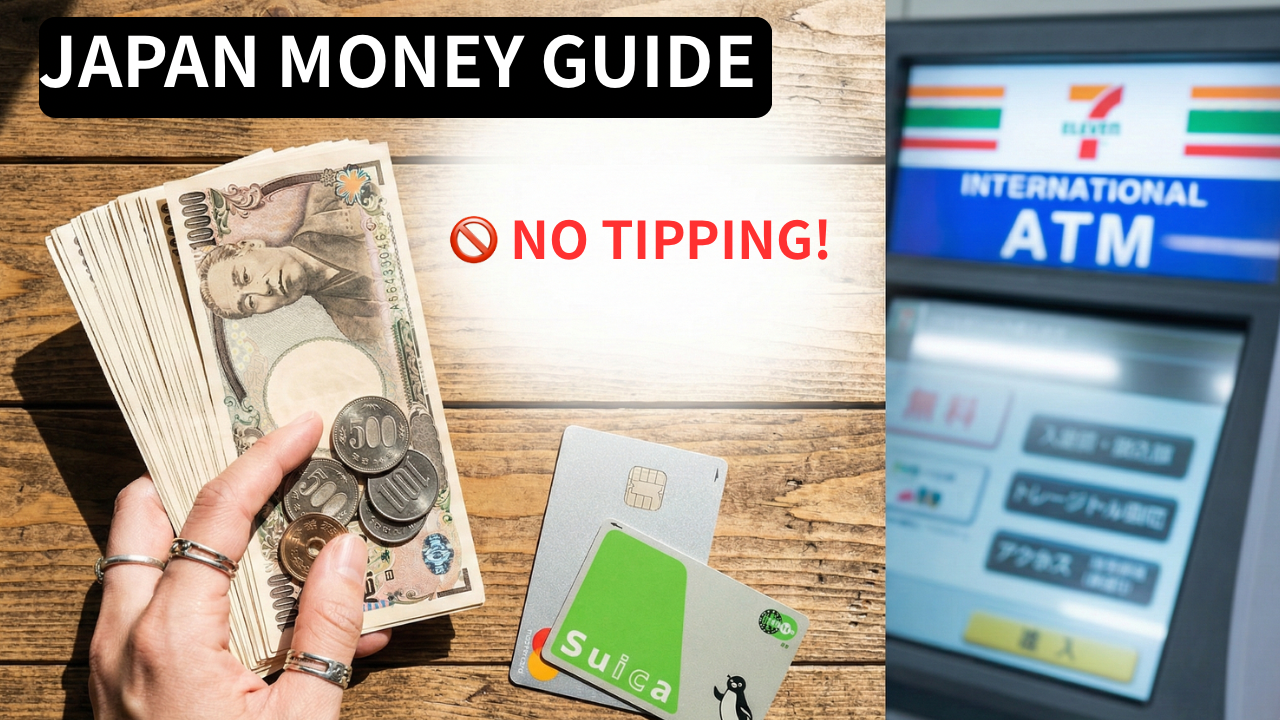
🚫 Rule #1: Do NOT Tip in Japan
Let’s start with the most important rule. There is NO tipping culture in Japan.
It does not matter how amazing the service was. Whether you are in a Michelin restaurant, a taxi, a Ryokan, or a hair salon—do not leave a tip.
🛑 Why is it rude?
In Japanese culture, good service is already included in the price. If you leave money on the table, the staff will think you forgot it and will literally chase you down the street to return it.
It causes confusion and embarrassment for everyone. Just don’t do it.
“So, how do I say thank you?”
If you want to show appreciation, do these three things instead:
- Say “Arigato Gozaimasu” (Thank you very much) with a slight bow.
- Write a 5-star Google Map Review. Japanese businesses care about this more than money.
- Just come back again. Being a repeat customer is the highest honor.
💴 Cash vs. Card: Do I Need Yen?
Many guidebooks say “Japan is a cash-only society.” This is changing, but Cash is still King.
✅ Where You Can Use Credit Cards
- Major Hotels & Department Stores
- Convenience Stores (7-Eleven, Lawson, FamilyMart)
- Most Chain Restaurants (McDonald’s, Starbucks, etc.)
- Trains (via Mobile Suica on iPhone)
❌ Where You MUST Have Cash
- Ticket Machines: Buying physical train tickets or recharging IC cards (most machines are cash only).
- Shrines & Temples: Entrance fees (¥300-¥500) and charms (Omamori).
- Rural Ryokans: Some older places in the countryside (like Shirakawa-go).
- Street Food & Vending Machines: Although many vending machines now take apps.
- “Cash Only” Izakayas: Some small, authentic bars only take cash.
My Advice: Always carry about 10,000 to 20,000 Yen ($70-$140 USD) in cash, just in case.
🏧 How to Get Cash: The “7-Eleven” Savior
Do not exchange currency at the airport (the rates are terrible). The best way to get Yen is to use an ATM in Japan.
🏪 Go to 7-Eleven (Seven Bank)
The ATMs inside 7-Eleven convenience stores are the best friends of international tourists.
- ✅ Open 24/7.
- ✅ English menu available.
- ✅ Accepts almost all foreign cards (Visa, Mastercard, Amex, Debit).
- ✅ Fees are low.
Lawson and FamilyMart ATMs are also good, but 7-Eleven is the most reliable.
⚠️ CRITICAL WARNING: The “DCC” Trap
This is where 90% of tourists lose money. When you use an ATM or pay with a card at a shop, the machine might ask you:
“Would you like to pay in JPY (Yen) or USD (Dollars)?”
🚨 ALWAYS CHOOSE “JPY” (Yen)!
If you choose USD, the shop’s machine will use a terrible exchange rate (Dynamic Currency Conversion) with high hidden fees. You can lose 5-10% instantly.
Always let your own bank do the conversion. Always select local currency (JPY).
🛍️ Tax-Free Shopping: Save 10% Instantly
If you are a tourist staying for less than 6 months, you can shop Tax-Free (save 10% sales tax) at major stores like Uniqlo, Don Quijote, BIC Camera, and large drugstores.
How it works:
- Look for the “Tax-Free” logo at the shop counter.
- Spend more than 5,500 Yen ($35 USD) (excluding tax) in one day at that shop.
- Show your PASSPORT (Original). Photos or copies are NOT accepted.
- The cashier will deduct the 10% tax instantly.
⚠️ IMPORTANT RULE for Consumables
If you buy “Consumables” (Food, Cosmetics, Snacks), the shop will seal them in a special plastic bag.
DO NOT OPEN THIS BAG until you leave Japan.
If customs officials verify you opened or consumed the items inside Japan, you may have to pay the tax back at the airport.
🪙 Prepare for “Coin Hell”
Unlike the US, Japan uses coins for everything. You will quickly accumulate heavy 1, 5, 10, 50, 100, and 500 Yen coins.
💡 Pro Tip: Bring a Coin Purse
Regular wallets cannot handle the amount of change you will get. If you have too many coins, use them to recharge your Suica/Pasmo card at train station ticket machines!
FAQ: Common Money Questions
Q: Can I pay with US Dollars (USD)?
NO. You cannot use US Dollars, Euros, or any foreign currency in shops or restaurants. You must pay in Japanese Yen (JPY) or Credit Card.
Q: Should I carry 10,000 Yen bills?
Try to break them into 1,000 Yen bills at a convenience store. Many taxis, vending machines, and small ramen shops generally refuse large 10,000 yen bills for small payments.
Q: Can I charge my Suica/Pasmo with a Credit Card?
Mostly NO. Ticket machines at stations usually only accept CASH. If you use Mobile Suica on iPhone, you can charge via Apple Pay.
Don’t have an IC Card? Order “Welcome Suica” now:
🐧 Buy Welcome Suica (Klook)Final Verdict
- No Tipping: Keep your money. Say “Arigato”.
- Always Choose JPY: Don’t let the machine convert to USD.
- Cash is King: Always carry 10,000 Yen in cash.
- Use 7-Eleven: It’s the best place to withdraw money.
🗼 Ready to spend your Yen?
Now that you have cash, let’s start planning.
Most travelers start in Tokyo. Here is the perfect 3-day plan.
(Includes: Shibuya Sky, Disney, and Harry Potter links!)

コメント